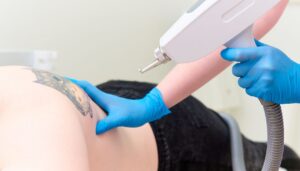

Is winter a good time for laser tattoo removal?
Winter is one of the easiest times to start, mostly because of the sun. After a session, treated skin needs to stay covered while it heals. Once it has fully healed, it needs SPF every day until your next appointment. Sun on healing skin can cause pigment changes and can push your next session back.
In the summer, that means planning around beach days, cookouts, and short sleeves. In January, it mostly means wearing what you were already going to wear.
How Cold Weather Makes Healing Easier
It’s already covered. Long sleeves, jeans, and hoodies keep the area out of the sun without you having to think about it. And if you’d rather not answer questions about a bandage at work, that’s covered too.
Less heat, less sweat. Hot, sticky days are rough on freshly treated skin. Cooler weather makes those first few days a lot more comfortable.
No swim season to sit out. You’ll need to skip pools, lakes, hot tubs, and baths until the treated area has fully healed. That’s an easy ask in February. It’s a much harder one in August.
Why Starting Now Means More Sessions Done by Summer
Tattoo removal runs on your body’s schedule, not ours. The laser breaks the ink into tiny particles. Then your immune system spends the following weeks clearing them out. That’s why sessions are spaced weeks apart, and why there’s no way to cram them together.
So the calendar matters. Start in November, and with sessions spaced roughly six to eight weeks apart, you could have three or four behind you by the time shorts come out. Start in May, and you’ll spend the summer guarding a treated area from the sun with only one or two sessions to show for it.
Whether your goal is clear skin or a lighter canvas for new work, the people who are happiest in June usually started in the winter.
Winter Aftercare Mistakes to Avoid
Winter has its own curveballs. Keep these in mind:
- Ski trips and snow days. Fresh snow reflects a lot of UV back up at you, and the sun hits harder at altitude. If a treated area could be exposed, cover it and use SPF 30 or higher.
- That holiday trip somewhere warm. Tell us about it when you book. We’ll help you time your sessions so you’re not healing on a beach.
- Dry indoor heat. Heated rooms pull moisture out of your skin, and dry, healing skin itches more. Stay on top of the ointment your specialist recommends.
- Heavy fabrics. Wool sweaters and stiff coat sleeves can rub against a bandage. A soft layer underneath helps.
- Hot tubs and saunas. The après-ski hot tub can wait until you’re fully healed.
For the full rundown on caring for your skin between sessions, see our Treatment Guide & Aftercare page.
Timing Your Removal Around the Seasons
Laser tattoo removal works any time of year, but winter makes it easier to protect healing skin and gives you a head start on the sessions removal takes. Plan around ski trips and warm-weather getaways, keep treated skin covered and moisturized, and use SPF daily once it heals. Start when you’re ready, and let the calendar work for you instead of against you.
Get a Personalized Tattoo Removal Plan From Rethink Laser Tattoo Removal
Your ink, skin, and schedule are all part of the plan. At your free consultation, your Certified Laser Specialist will look at your tattoo, tell you how many sessions to realistically expect, and help you time them around your year, so you can make the most of hoodie season.
Frequently ASKED QUESTIONS
Can you get laser tattoo removal in the summer?
Yes. Laser tattoo removal works year-round. In warmer months, you’ll just need to be more careful about keeping the treated area covered and protected with SPF 30 or higher between sessions.
How long do I need to keep the treated area out of the sun?
Keep it covered while it heals, which usually takes about four weeks. After that, apply a broad-spectrum SPF 30 or higher every day until your next session.
Does cold weather slow down healing?
Cold weather on its own isn’t a problem. Dry indoor air is the bigger issue, since it can make healing skin itchier. Keep the area moisturized with the ointment your specialist recommends.
How far apart are laser tattoo removal sessions?
Sessions are usually spaced about six to eight weeks apart. That gives your skin time to heal and your immune system time to clear the broken-down ink before the next treatment.
How many sessions will I need?
It depends on your ink color, density, depth, the tattoo’s age, and where it sits on your body. Your specialist will give you a realistic estimate at your free consultation.